Donegall Street Belfast: Cathedral Landmarks, Georgian Details and a Road Mix-up to Avoid
Donegall Street links Belfast city centre to the Cathedral Quarter. Find your bearings by St Anne’s Cathedral and Writers’ Square, admire restored Georgian doorcases, and learn its “Fleet Street” past and wartime history.
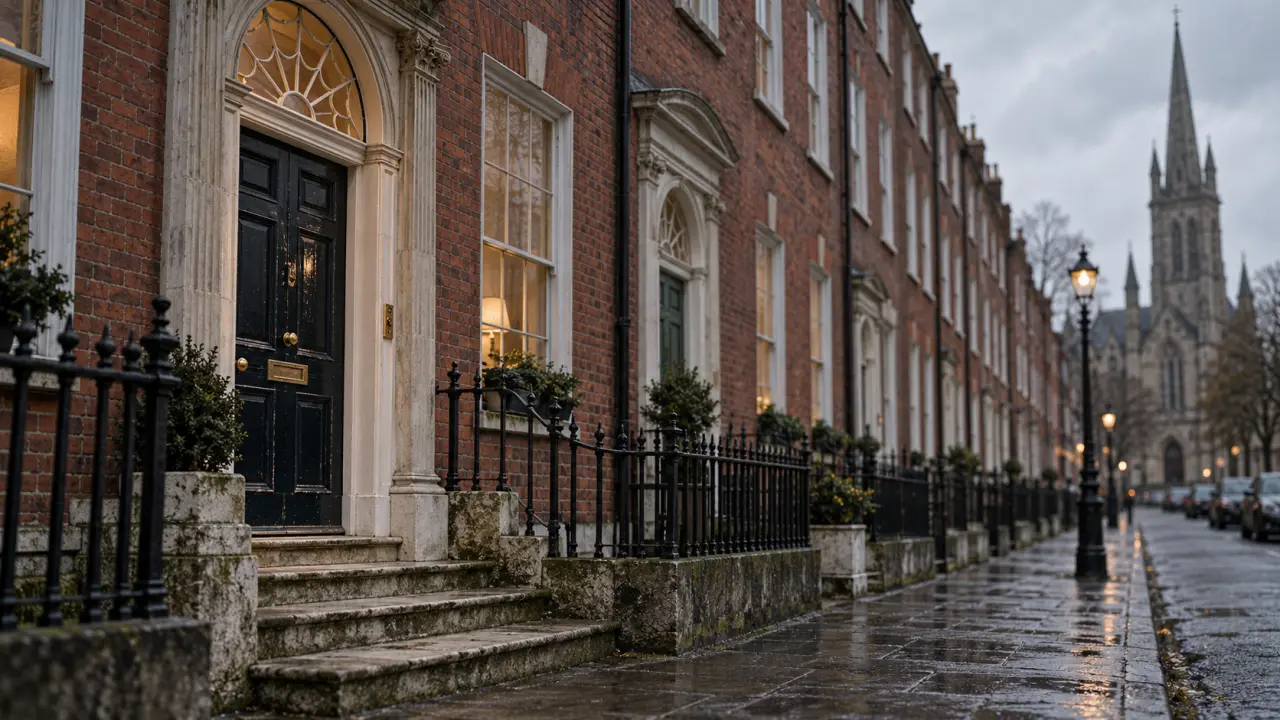
Donegall Street connects Belfast city centre with the Cathedral Quarter, with High Street and St. Anne’s Cathedral providing useful points of reference. It is a different destination from Donegall Road: check the full street name before setting off.
Donegall Street Belfast: finding your bearings
City Tours Belfast’s street profile places Donegall Street on the approach to the Cathedral Quarter. St. Anne’s Cathedral and its Spire of Hope are prominent landmarks; Writers’ Square is another useful reference when orientating yourself around the area.
A street with a newspaper past
The same profile records Donegall Street’s association with newspaper offices and its reputation as Belfast’s own Fleet Street. Its history also includes the Belfast Blitz of April and May 1941 and the 1972 bombing outside the News Letter offices, which killed six civilians. These are distinct chapters in the street’s history, rather than simply background to a sightseeing stop.
Look closely at the Georgian buildings
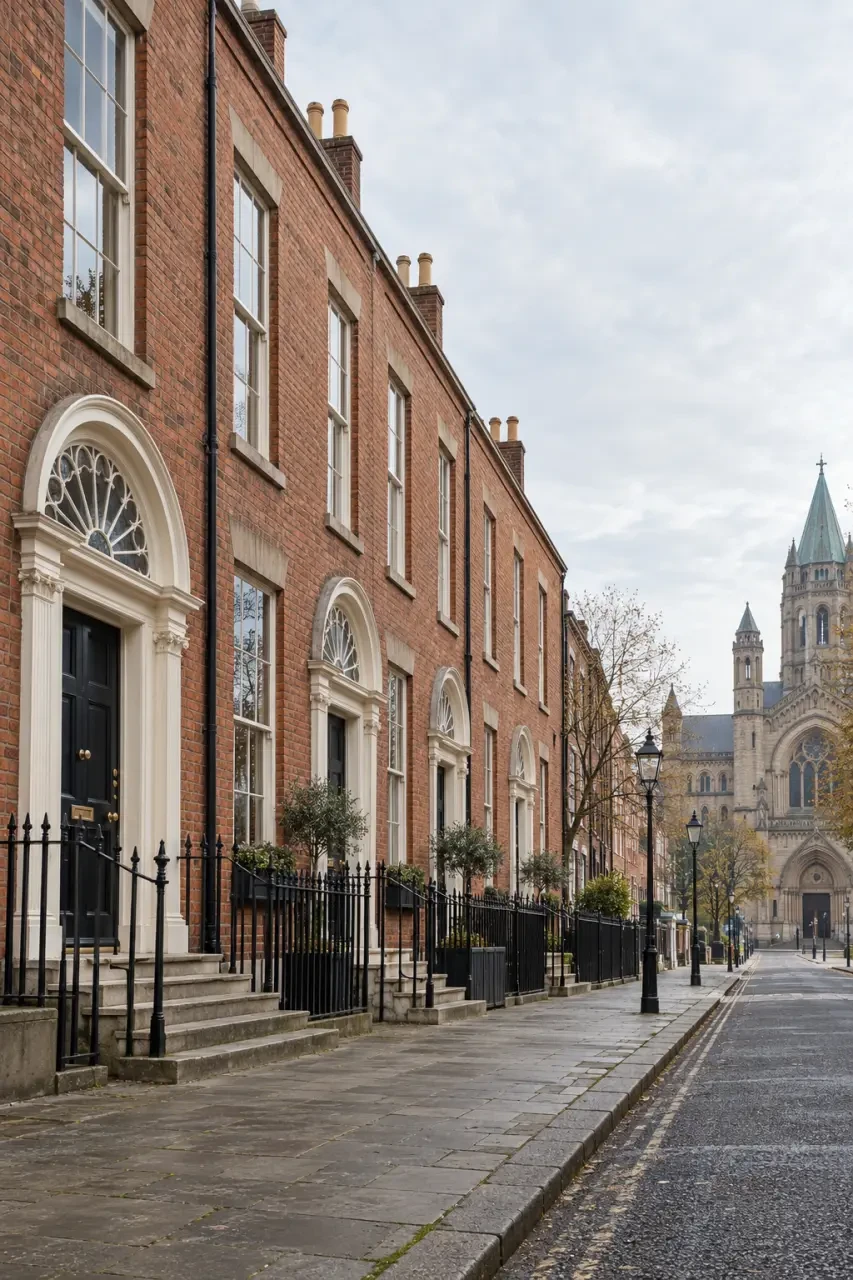
Hearth Historic Buildings Trust’s restoration account documents work at 201–205 Donegall Street, including repairs with salvaged brick and restoration of doorcases and spiderweb fanlights.
Those repeated architectural details offer a useful way to read the street: look for the echo of one doorway in the next. Comparing fanlights, brickwork and window arrangements draws attention to the terrace as a connected composition, rather than a collection of separate façades. Hearth’s before-and-after photographs help make those conservation details easier to recognise.